Introduction: what makes robbery "armed"?
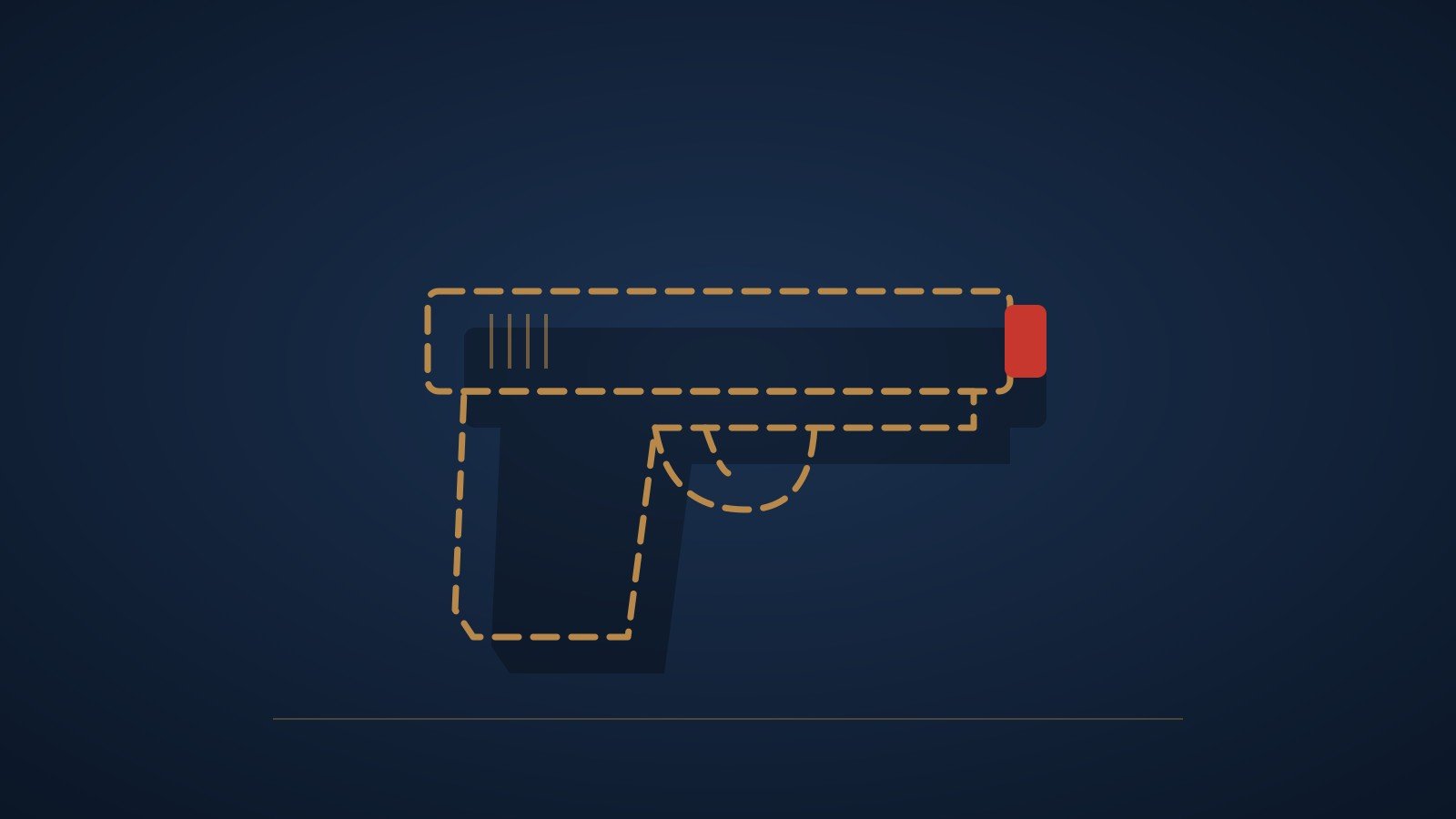
A robber points a pistol at a cashier. Only after the arrest does it emerge that the gun is a plastic replica, without the red safety cap. The victim felt the same fear; the danger to their life, however, never existed. Should the offence be punished as armed robbery or as simple robbery?
The answer depends on how the ratio of the aggravating circumstance is read. There are two options:
intimidation ratio: the weapon aggravates because it increases the psychological coercion of the victim and suppresses any reaction. What counts is appearance, i.e. the effect produced;
danger ratio: the weapon aggravates because it introduces a real risk to life and bodily integrity. What counts is the objective nature of the instrument.
European and North American legal systems are spread along this axis, with very different sentencing outcomes for identical conduct. Italian law, as will be shown, sits closer to the first pole than is commonly assumed, which raises a problem of compatibility with the harm principle (principio di offensività).
Italy: equivalence by statute and the recognisability test
Article 628(3)(1) of the Italian Criminal Code (c.p.) punishes robbery in which violence or threat is committed "with weapons" with six to twenty years' imprisonment and a fine of €2,000 to €4,000. The notion of weapon is taken from Article 585(2) c.p., which covers both weapons proper and improvised weapons.
The decisive provision, however, lies outside the Code. Article 5(7) of Law no. 110 of 18 April 1975 provides that where the use or carrying of weapons is a constituent element or an aggravating circumstance of an offence, the offence is committed or aggravated even if the item is a stage weapon or a toy reproducing a weapon whose barrel is not closed by the red cap. The legislature has therefore already taken sides: a replica without its distinguishing mark counts as a weapon.
Case law has extended the test beyond the formal red-cap criterion. An older line of authority excluded the aggravating circumstance, holding that its ratio lay in the intrinsic nature of the instrument rather than in its intimidating effect (Cass., Sez. I, no. 10438/1977). The settled position today looks instead to the victim's perception:
a toy gun triggers the aggravating circumstance if it is not immediately recognisable as such (Cass., Sez. II, no. 4712/2017; Sez. II, no. 8164/2022);
the circumstance applies even where the red cap is present but concealed, if only temporarily;
it is excluded where the victim immediately recognised the pistol as harmless, even without a red cap;
it is excluded for mere simulation, such as a hand in a pocket mimicking a gun;
it is excluded for a real weapon that is wholly unfit for use because of serious defects (Cass., Sez. II, no. 9510/1990).
The result is a hybrid system. As to the object, a physical item reproducing a weapon is required: a simulated gesture is not enough. As to the effect, the victim's perception is what matters. Real danger to life is not required.
This is not strict liability in the technical sense. The aggravating circumstance is objective in nature (Art. 70 c.p.), but the offender knows perfectly well that he is using a replica and intends to exploit its appearance. Intent covers the aggravating fact; there is no gap between what the offender foresees and what is attributed to him (Arts. 59(2) and 42(3) c.p.). The problem lies not in culpability but in harm: the sentence is increased for an injury (danger) that is absent from the concrete facts.
One practical point softens the picture. Article 628(5) c.p. excludes from the balancing of circumstances the aggravating factors in paragraphs (3), (3-bis), (3-ter) and (3-quater), but not paragraph (1). The court may therefore find mitigating circumstances to prevail (Art. 69 c.p.), and this is precisely where the defence should stress the absence of real danger.
The comparison: six answers to the same facts
No system examined leaves the replica unpunished. The difference lies in the step on the sentencing ladder: full equivalence with a real weapon, an intermediate offence, or simple robbery.
Jurisdiction | Key provisions | Imitation / unloaded weapon | Model |
|---|---|---|---|
England and Wales | s. 8 Theft Act 1968; ss. 17-18 Firearms Act 1968; Sentencing Council Robbery Guideline (2016) | Producing an imitation firearm = high culpability (category A), as with a real one | Perception-based (at sentencing) |
Ireland | s. 14 Criminal Justice (Theft and Fraud Offences) Act 2001; s. 27B Firearms Act 1964 | Separate offence for imitation firearms, presumptive minimum of 5 years; robbery sentence graded below a loaded weapon | Perception-based in the offence, graded in sentence |
France | arts. 311-8 and 132-75 Code pénal | An object resembling a weapon so as to cause confusion is "assimilé à une arme": vol avec arme, 20 years' réclusion criminelle | Perception-based by statute |
Germany | § 250 StGB | Fake or unloaded weapon: Abs. 1 Nr. 1b (minimum 3 years), not Abs. 2 Nr. 1 (minimum 5 years); obviously harmless objects excluded | Intermediate |
Spain | art. 242 Código Penal | Simulated pistol outside the aggravated subtype, unless usable as a blunt instrument | Real danger |
United States | 18 U.S.C. § 2113(d); N.Y. Penal Law § 160.15(4) | Federal: even an unloaded gun is a dangerous weapon. New York: first degree, unless the defendant proves the weapon was not loaded and operable | Perception-based with reverse burden (NY) |
England and Wales. Robbery is a single offence carrying a maximum of life imprisonment; the weapon matters at sentencing. The Robbery Guideline places in the high-culpability bracket the production of a bladed article, firearm or imitation firearm to threaten violence. The Sentencing Council justified the choice on the ground that the fear caused to the victim would likely be the same.
Ireland. Alongside robbery (s. 14 of the 2001 Act), s. 27B Firearms Act 1964 criminalises having a firearm or an imitation firearm with intent to commit an indictable offence. In DPP v Paulauskas [2017] IECA 306, however, the Court of Appeal adjusted the robbery sentence: robberies with real, loaded firearms belong in a graver category. Otherwise, the Court observed, the law would encourage offenders to bring a real gun.
France. This is the perception-based model in its purest form. Article 132-75(3) Code pénal treats as a weapon any object that, by its resemblance, causes confusion and is used to threaten to kill or injure. The replica thus turns an offence tried by the tribunal correctionnel into a crime tried by the Cour d'assises.
Germany. The 1998 reform (6. StrRG) built a three-step ladder. A real weapon that is used carries a minimum of five years (§ 250 Abs. 2 Nr. 1); a fake weapon (Scheinwaffe) or unloaded gun a minimum of three (Abs. 1 Nr. 1b); simple robbery remains under § 249. The Federal Court of Justice (BGH) also excludes from Abs. 1 Nr. 1b objects whose threatening force derives solely from deception because they are obviously harmless: the well-known Labello case, in which a lip balm stick was pressed into the victim's back (BGH, 20 June 1996, 4 StR 147/96).
Spain. The Tribunal Supremo reads the aggravated subtype in terms of danger: it does not punish intimidation, already part of the basic offence, but the increased risk to the victim's life and bodily integrity. A simulated pistol qualifies only if, by its weight and features, it can be used as a club or hammer (STS 1347/1999, 24 September).
United States. In McLaughlin v. United States, 476 U.S. 16 (1986), the Supreme Court unanimously held that an unloaded gun is a dangerous weapon. It gave three reasons, each sufficient on its own: the gun instils fear, it creates a risk of a violent response, and it can be used as a bludgeon. New York adopts an original procedural solution. First-degree robbery only requires the offender to display what appears to be a firearm; the defendant can reduce the charge to second degree by proving, on the balance of probabilities, that the object was not a loaded and operable weapon. In December 2025, in People v. Smith, the Court of Appeals upheld this burden even for a BB gun, with three judges dissenting.
https://www.studiolegalecentore.it/en/#contatti
Fonti
Italia
Art. 628 c.p.; art. 585 c.p.; art. 5, co. 7, l. n. 110/1975.
Cass., Sez. I, n. 10438/1977; Sez. II, n. 9510/1990; Sez. II, n. 4712/2017; Sez. II, n. 8164/2022 — massima, Ordine Avvocati Sondrio; rassegna Filodiritto; Studio Cataldi.
Corte cost. n. 86/2024; Corte cost. n. 120/2023, n. 263/2000, n. 225/2008.
Comparazione
Inghilterra e Galles: Sentencing Council, Robbery – street and less sophisticated commercial; verbale del Council, ottobre 2015.
Irlanda: s. 27B Firearms Act 1964, come sostituita dal Criminal Justice Act 2006; DPP v Paulauskas [2017] IECA 306.
Francia: art. 311-8 e art. 132-75 Code pénal — risposta ministeriale, Assemblée nationale.
Germania: § 250 StGB; BGH, 4 StR 227/07; BGH, 4 StR 394/06; BGH, 4 StR 147/96 (Labello).
Spagna: art. 242 Código Penal; STS 1347/1999 — richiamata in SAP 17/2026.
Stati Uniti: McLaughlin v. United States, 476 U.S. 16 (1986); People v. Smith, N.Y. Court of Appeals, dicembre 2025.